The Parts of Coaching You Don’t See
Tony Adragna · October 7, 2026
High school basketball coach Tony Adragna shares the unseen work of coaching, from practice planning and player relationships to family sacrifice.
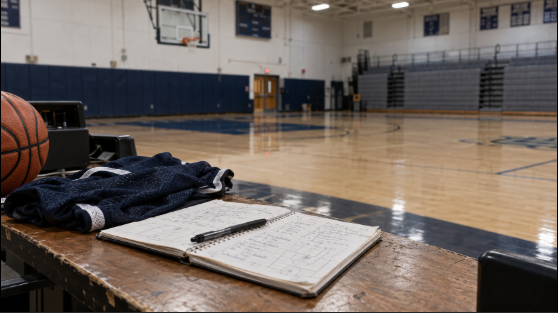
I’m sitting here on an October day thinking through everything we need to have ready for the season. We’re still weeks away from our first official practice, but my mind is already bouncing between gear distribution, transportation, team meals, physicals, practice schedules, and media day.
Then there’s the basketball. What do we need to install offensively and defensively? What will our press breakers and out-of-bounds plays look like? How are we going to handle different game situations? Who’s on varsity, who’s on JV, and will we have enough players for a third team?
At the same time, I’m thinking about what we’re seeing in fall workouts. Where are we getting better? Where are our weaknesses? Are there blind spots our staff is missing? We also need to figure out our scouting responsibilities, stay connected with our middle school coaches, and know when our youth teams play so we can get out to watch them.
That’s some of what’s going through my mind right now. If you’ve been a head coach, you probably have your own version of that list. If you haven’t, it might help explain how much of the job happens before anybody walks into the gym to watch a game.
Most of the coaching happens before gameday
When people watch a coach, they see the starting lineup, the substitutions, the timeouts, and the decisions made in the heat of the game. Those decisions matter, and I understand why people focus on them. They’re the part of the job everybody can see.
But honestly, gameday is probably one of the easier aspects of coaching. You still have to adjust and make decisions under pressure, but by that point, the majority of your coaching for that game has already happened. You and your staff have studied the opponent, built the scouting report, worked through a gameplan, and planned practices around what your players need to be ready for.
Preparation breeds confidence. We want our guys going into a game confident because they understand what they’re going to see and how we want to handle it. That takes work throughout the week, along with the relationships and habits you’ve been building long before that particular opponent showed up on the schedule.
What a coaching day actually looks like
This past Sunday, I planned our workouts for the week, broke down a recent scrimmage, and pulled out positive and negative plays. Then I recorded myself going through the breakdown so I could send the feedback to our players while it was still fresh.
After that, my wife and I organized gear for the season. We put together travel suits, practice packs, and team shirts for each player. Later, I met with our youth coaches to talk through our goals and how we want the youth program to operate.
None of that involved standing on a sideline, but all of it was part of preparing our program. So is communicating with parents, checking on grades, coordinating with assistants, and working through the details that help everything run.
I have help with those responsibilities. Our school staff handles scheduling and ordering, and we collaborate on eligibility, fundraising, strength work, and other needs. My assistants have a huge role in preparing and supporting our players. Positive support means everything, and having people around you who care about the program makes the job a lot easier.
As the head coach, though, I feel responsible for making sure it all comes together. If something gets missed, I have to own my part in it and help get it fixed. I had plenty of coaching experience before taking this job, but I didn’t fully appreciate how much of my responsibility would involve things that have very little to do with teaching basketball.
Being responsible for the whole basketball program
One of the biggest changes as a head coach is how many people you’re thinking about. Your attention stretches from a third grader just getting started to a senior preparing for his last season, and what each of them needs from the program can be very different.
For our younger players, culture and excitement are two of the biggest priorities. I want them pumped up about being part of our high school program someday, and I want them to feel included in what we’re doing now. To those kids, our varsity players are celebrities. They hold them in the same regard as NBA players, so when one of our guys is intentional about spending time with a younger player, it means everything to him.
That’s why staying connected with our youth coaches and helping our high school players build those relationships matters. If the younger kids also learn some of our offensive and defensive pillars along the way, that’s a bonus. First, I want them excited to belong to the program.
As players get older, you become more invested in where their lives are going. You want them to thrive, and you feel it when things don’t go the way you hoped. A loss can be frustrating, but so can feeling like you failed to help a kid stay on the right track, having a player leave the program unhappy, or looking back on a decision you wish you could make again.
I take those things personally, even when I don’t have much control over the outcome. That’s something I’m still working through, because caring about people doesn’t mean you’re going to be able to make every situation turn out the way you want.
Making difficult decisions while protecting trust
I’m a people-pleaser, which makes this part of coaching hard. Sometimes the role that’s best for the team is a role a player doesn’t want. You have to explain the decision, help him understand how he can contribute, and keep working with him even if he’s disappointed.
You can communicate clearly and treat somebody fairly, and they can still be unhappy with you. Even in a winning program, it’s very difficult for everybody to be happy. I know that, but it doesn’t stop me from replaying a conversation, wondering whether someone misunderstood me, or thinking that maybe one more explanation would help.
Ultimately, I have to make decisions with the whole program in mind. We ask players to make individual sacrifices for the greater good of the team, and that has to guide us as coaches, too. Part of the responsibility is being willing to make a decision you believe is right while understanding that the person affected may see it differently.
There are also times when you can’t publicly share everything that goes into a decision. Players confide in you and trust you with parts of their lives. Protecting that confidence is part of the job, even when sharing more might make your decision easier for somebody else to understand. Relationships and trust are the backbone of a program, and you can’t afford to damage them just to make yourself look better in a conversation.
The coaching responsibilities that follow you home
A lot of that stays with you after practice. Jess sees the late nights watching film and listens to the frustrations I can’t share with everybody else. She hears me work through decisions, challenges my thinking, and reminds me not to be as hard on myself as I tend to be.
Basketball is an imperfect game, but coaches are often perfectionists. There’s always something to fix, something to study, or an edge to find. If you let it, coaching can become all you think about. I’m still learning how to avoid paralysis by analysis and recognize when more thinking isn’t helping me move forward.
That makes balance something I have to approach intentionally. When I block off time for work, basketball, or family, I try to keep the other responsibilities from bleeding into it. My family deserves my commitment, my day job deserves my commitment, and my team deserves my commitment. I owe it to each of them to be present during the time I’ve set aside.
When I first got into coaching, I lived in an apartment by myself. I understood that the job took a lot of time, but the sacrifice looked different. Now I have a wife, three kids, and a business to help run. The time sacrifices have actual people involved in them, so I have to be thoughtful about how I spend my time and what I’m bringing home mentally.
Why I still love being a basketball coach
With everything that goes into it, I still love this job. I love the game, and I love finding solutions to problems. Last season, when we were 3–10, I was still fired up to come to practice because we could see on film that we were getting better. The results hadn’t shown up yet, but the progress was there, our players were buying in, and we had something to keep working toward.
I enjoy the everyday interactions, too. You spend all this time thinking through how to prepare a team, and then a kid walks past you smelling like a dead animal and suddenly the next thing you need to teach is that practice jerseys have to be washed. You get plenty of moments like that when you work with teenagers.
Over time, those daily interactions become relationships with players, their families, other coaches, school staff, and alumni. Some of those relationships last a lifetime. When a player reaches out to talk about what he wants to do with his life or asks for help figuring out his next step, it means everything. He trusts that you have his best interests in mind, and helping him navigate that is a responsibility I’m grateful to have.
If somebody asks what being a head coach is like, all of that is part of my answer. You get to teach a game you love and help young people grow, while managing details, making difficult decisions, and learning how to give your team what it needs without losing sight of the other people who depend on you.
When you see a coach on the sideline, you’re seeing one part of that job. There’s a whole week of preparation, conversations, decisions, and sacrifice behind it. Most of that work happens with nobody watching, but it matters to the people in the program. That’s why I keep coming back to it.